
Caregivers aren’t just emotional support and side characters in the treatment plan, they are, often, the only continuity across specialists, surgeries, facilities and years of patient history.
America’s healthcare challenges aren’t just political or financial, they’re also clinical. They unfold at the bedside, where real-time decisions get made, and too often, the one person who could prevent many mistakes is ignored: the family caregiver.
I’ve spent a lifetime as the sole caregiver for my wife. She was severely injured before we met, with 21 operations already behind her. That number now stands at 98, including the eventual removal of both of her legs. Over four decades, I’ve managed her complex medical journey, one that’s stretched across multiple hospitals, dozens of specialists and nearly $20 million in medical costs. In the process, I discovered an essential, often-overlooked resource for patient care: the caregiver’s voice. The most valuable thing I’ve gained isn’t a degree or clinical training. It’s that I know Gracie better than anyone else.
I possess what I’ve dubbed “Caregiver Authority.” It isn’t honorary or hypothetical, it’s expertise born of relentless proximity and sustained responsibility. It’s knowing your loved one’s baseline, history, quirks and warning signs, by heart.
I know how she breathes when something’s wrong. I know her skin tone. I know her humor when she’s okay and the absence of it when she’s not. I also know which medication makes her nauseated on day three, not day one. Not because I read it. Because I lived it.
In a sea of shifting providers, exhausted friends and fading support systems, I’m the one who stayed. That’s not bravado. That’s what happens when the weight of care falls on one person.
When that authority is dismissed, what gets missed isn’t just dignity, it’s clinical accuracy. And the patient, as well as the caregiver, often pay the price.
After revision surgery at her right amputation site, a stubborn wound refused to heal. Her orthopedic surgeon resisted my suggestion to involve a plastic surgeon. But he wasn’t the one dressing the wound day after day; I was. Eventually, I independently sought a plastic surgeon who resolved the issue quickly, though it cost me the relationship with the orthopedic surgeon.
Afterward, the surgeon told me, “In all my years, I’ve never seen this complication with this type of surgery.”
Smiling wearily, I said, “The first time I heard a surgeon say that to me… Ronald Reagan was president.”
I’m articulate. I’m calm under pressure. I’ve navigated boardrooms and ICUs, and I know how to push politely, persistently and, then, firmly. But most caregivers don’t have those attributes, yet. They’re tired. Intimidated. Grieving.
Some are so overwhelmed they can’t form the right questions, much less challenge a treatment plan. Still, buried under that fatigue is knowledge, firsthand data that could streamline care, prevent trial-and-error treatment and improve outcomes. Sometimes it takes more than just speaking up; it takes stepping in.
There are moments when you don’t just advocate, you intervene. During one hospital stay, a crisis brought a large group rushing to the room. I pushed back on the treatment plan. A defensive chief resident responded, “We’ve been doing this a long time.” The room, filled with nurses, a PA and two surgeons, went quiet when I answered, “I’ve been doing it longer.” I wasn’t trying to score points, I was trying to prevent a mistake. I was right. They shifted course. My wife got the care she needed.
The chief resident apologized and I accepted without spiking the football. Because the goal isn’t to win. It’s to protect the one I love most.
Then there are the moments when you’re not only consulted but also conscripted. Once, after a spinal procedure went sideways and resulted in a wet tap, an accidental puncture of the dura mater that allowed cerebrospinal fluid to leak and triggered debilitating headaches, a blood patch was needed. In recovery, short on hands and running out of time, the anesthesiologist looked at me and said: “Wash your hands and get some gloves. You’re helping.”
So, I did.
There I was, hands trained for the piano, now beside a physician doing something I never dreamed I’d do.
As an aside, I’ve been called Dr. Rosenberger more than a few times. When asked if I’m a real doctor, I usually respond, “I’m certified in cranial proctology, with experience treating those suffering from neural rectitis.”
Caregivers aren’t just emotional support. We’re not side characters in the treatment plan. We are, often, the only continuity across specialists, surgeries, facilities and years of patient history.
Clinicians log data into charts. But caregivers carry the narrative.
When doctors and nurses don’t draw from that resource, it’s not only a missed opportunity for compassion but also a missed opportunity for precision.
The best clinicians I’ve worked with had one trait in common: curiosity. They didn’t wait for me to offer information, they asked for it, like: “What’s different from how your wife normally is?”, or “Is there something that feels off, even if you’re not sure why?” or “What are we missing?”
They weren’t asking for a diagnosis. They were tapping into decades of real-time data. That’s not just good rapport. That’s strategic intelligence gathering.
Some caregivers won’t speak unless invited. Others need more than permission; they need what I call aggressive assurance: proactively communicating to caregivers that what they know, see and feel matters.
No new budget required. No special training. Just a moment of humility and a better question.
Surgeons could try by asking: “What are we not seeing?” or “What’s something that doesn’t sit right with you?” or “If you had five minutes to tell us what matters most, what would you say?”
This isn’t about kindness. It’s about clinical awareness.
There are an estimated 65 million caregivers in America. Many can’t speak the language of medicine, but they live its consequences daily. They don’t clock out. They don’t round. They carry the weight of every treatment long after the last note is charted. They don’t want the scalpel. But they deserve a seat at the table and a chance to speak.
Clinicians who recognize caregiver authority deliver not only compassionate care, but also smarter, safer and better medicine.
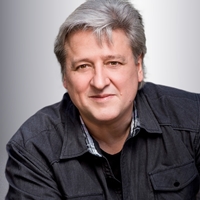
Peter Rosenberger is the host of ‘Hope for the Caregiver’, a popular podcast for family caregivers. He has authored numerous articles on healthcare, suffering and policy from the caregiver’s perspective. His book, ‘A Caregiver’s Companion’ (August 2025), offers daily insights for navigating life’s toughest role. For over 40 years, Peter has cared for his wife, Gracie, through 98 operations and a lifetime of disability.
 OpEd Column Syndication